Pros and Cons of Swaddling for Sleep

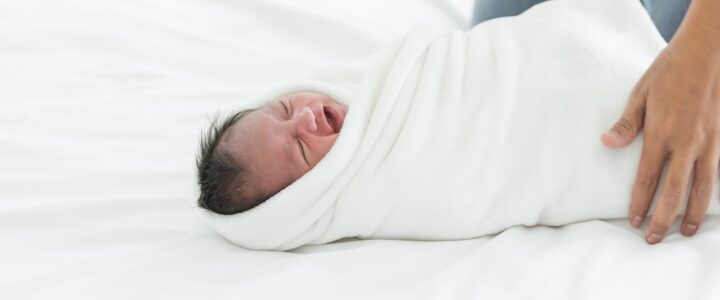
When babies are swaddled for sleep they miss the benefits of movement.

When babies are restricted from moving they can’t effectively build strength and coordination in their bodies. The only way they can learn how to move and use their bodies is to actually do it.

If babies rarely stretch their arms, move their legs, wiggle their toes and touch their bodies, their learning and development may be delayed. Read more

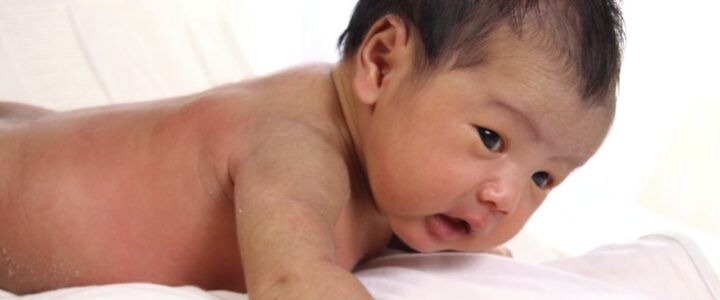
Tummy Time How-To

Tummy Time Is a Therapeutic Intervention

It is NOT an occasional playtime activity reserved only for babies who like it. All babies benefit from awake time in the belly-down position. Tummy Time helps babies develop their cervical and lumbar spinal extension curves. It helps babies who have soft tissue restrictions or tension, torticollis, plagiocephaly, brachycephaly, and oral motor issues. It promotes social engagement.

It is the essential antidote for the for the potential developmental delays associated with the effects of supine sleeping and too much time spent in car seats (any time that’s not a car ride), baby swings, bouncy seats, jumperoos, bumbo seats, rock ‘n play seats, mamaroo seats, supine baby activity centers, strollers, etc.

Babies who never spend time in the prone position will never crawl before walking. Crawling on hands and knees in a cross pattern before walking is essential for normal brain and body development.

During the first three weeks of life babies may do tummy time on the parent or caregiver’s chest or lap. After that, it should be on a surface.

Read more

Infant Neck Strengthening Recommendations for Parents and Caregivers

Stretching Doesn’t Help

Stretching has NOT been shown to be clinically effective for resolving torticollis.

What to Do Instead

The following recommendations help with neck and back strengthening. This can prevent and reduce the development of positional plagiocephaly or flat spots on one side of the back of a baby’s head.

Read more

The Safe to Sleep Program, SIDS and SUID

Why are We Putting Babies to Sleep on Their Backs?

The Hong Kong Studies

In 1985 after retrospectively investigating only 15 deaths, researchers concluded that that Hong Kong had a much lower rate of unexplained infant deaths than that of Western countries. They cited a low incidence of preterm birth in Hong Kong (a known risk factor for unexplained infant death) and two significant differences in infant sleep environments — crowded living conditions and the traditional Chinese practice of putting babies to sleep on their backs. Given the absurdity of recommending crowded living conditions and the unlikelihood of reducing preterm birth, they went with the supine sleep recommendation in their conclusions. Read more

Eat

Parents ask me about solid food introduction all the time. Here’s my take on it.

Babies Need Iron

Babies store iron in their bodies while they gestate. Milk has next to no iron in it. At some point after birth, babies’ iron stores begin to diminish. This is often when they show signs of interest in iron-rich solid food. Hopefully, this occurs around the time they are developmentally ready in other ways. Unfortunately, some babies have their cords clamped and cut too soon after birth and don’t get all of their own iron-rich blood – some of which remains in the placenta or umbilical cord. This can lead to anemia down the road or a premature necessity for solids or supplements before the baby is otherwise ready. Read more

Cry Baby

I recently had a conversation with parents about crying babies and toddlers. They were apartment dwellers who were concerned about disturbing the neighbors.

CRYING! It is, after all, a distress call. It’s disturbing — like having a shrieking smoke alarm in your living room. It’s supposed to attract parental attention. Crying is one of the baby’s main survival skills. It helps a baby tell parents/caregivers that they have an unmet need. Sometimes crying is a pain-coping practice. Other times it is a form of release. Read more

The Developmental Derby

In 1975 I moved back to LA. My first husband and I had spent three years away while he fulfilled his military obligation. Army life was hard on me. We lived in officer’s housing on an Air Force base in an isolated desert location. My husband was a research engineer assigned to NASA. He never wore a uniform. I was a misfit among the officer’s wives in my neighborhood. I was glad to be done with it and so happy to be home. The first person I met in my new LA neighborhood was a woman named Susan. She had a two year old daughter. I had a two year old son. Read more

Things We Do (After Birth) to Prevent Babies From Moving

I can’t leave The Stuck Baby Series without describing baby immobilization and container lifestyle. In this article I outline the most significant ways in which we prevent our babies from moving after they are born. It seems like the perfect preparation for a sedentary life in a recliner in front of a screen. Read more

How Fetal Constraint Affects Babies: Things We Notice After Birth

This is part six of the six-part Stuck Baby Series. In part one, My Baby Dropped!, I explain why engagement is pathology. In part two, Why Did My Baby Get Stuck?, I describe the maternal factors that cause babies to get stuck. Part three is Fetal Factors: How Babies Get Themselves Stuck. Part four explores Fetal Constraint: How Culture Immobilizes Babies. Last week, in part five, I looked at How Fetal Constraint Affects Labor and Birth. Today I’m going to describe how fetal constraint or lack of Optimal Fetal Positioning adversely affects the babies themselves — the things we notice at birth and beyond. Read more

Fetal Constraint: How Culture Immobilizes Babies

This is the fourth installment of the stuck baby series. Last week I described the fetal factors (ways babies get themselves stuck). The week before I discussed maternal factors. Three weeks ago I covered engagement and explained why it’s pathology. Next week I’ll go over how fetal constraint affects labor and birth. Stay tuned!

Today I’m going to discuss cultural factors that reduce babies’ opportunities to move in utero and cause them to get stuck. This is the category we can actually do something about because the factors are under our conscious control —  if we know enough and if we care care enough. Read more

Fetal Factors: How Babies Get Themselves Stuck

There are many things that contribute to fetal constraint (stuck babies). Any one of them can operate independently, but usually there are multiple causes for less than optimal fetal positioning that have synergistic or additive effects. As I continue to explore the multiple causes, I will provide examples of how these things can work in concert to prevent babies from moving into more ideal positions for their continued gestation, birth and a comfortable, functional life in their bodies outside the womb. Read more

Why Did My Baby Get Stuck?

When I consider how babies fit into — and through — a maternal pelvis I view it from three perspectives: midwifery, bodywork and yoga. As a midwife I generally know more about birth than many bodyworkers. As a bodyworker I know more about how, anatomically and bio-mechanically, a baby fits into and ultimately through a maternal pelvis – more than than some midwives. This is about optimal fetal positioning – or lack thereof. Read more

My Baby Dropped!

“My baby dropped!!” People usually say this with great enthusiasm when it happens. I’ve never really understood why people rejoice about their babies dropping. Read more

Craniosacral Therapy for the Perinatal Period

In my other life I’m a bodyworker and bodywork teacher. When I taught in-person prenatal yoga classes, my students often asked me about the benefits of bodywork during pregnancy. They wanted to know more about Craniosacral Therapy (CST) and how it can help. Today I’ll explain it. Read more